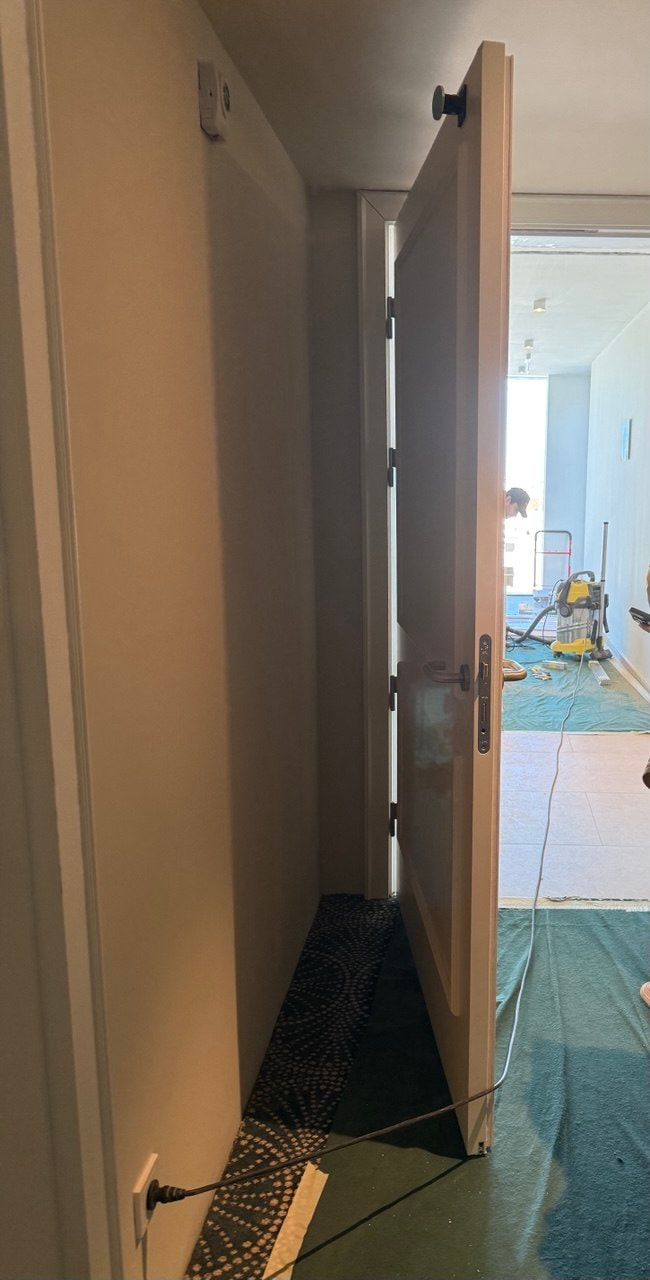
The key parameter for the design should be the clear passage size, since commercial spaces must comply with egress regulations based on the clear opening, not the frame size or wall opening. For this reason, it would be much more practical to prioritize the clear passage size in the designation, or alternatively the door leaf size.
It is also important that the frame size remains adjustable to suit the actual product.
Please also allow for the necessary installation tolerances / adjustable gaps.
The following items can also be included in the schedule/designation:
The example shows a fire-rated door in a hotel that looks visually clean and non-technical, while actually integrating a significant amount of hardware and having fire rating. These elements should ideally be considered both in the 3D model and in the specification. Relevant components may include, for example, an electromagnetic hold-open device, additional hinges, and a drop-down seal at the bottom of the door leaf.
If the door schedule/specification is prepared with a graphic representation based on the actual appearance of the door, it would also be useful to see some elements such as the door closer, door stop/retainer, and additional hinges in 3d not only a checkbox parameter ins the list.